

Upgrading to a Rinnai 32 Continuous Flow LPG Hot Water System
Our team attended a property in Glenhaven to replace an ageing storage hot water system with a new Rinnai 32 continuous flow LPG hot water system, providing the home with a more efficient, reliable and space-saving hot water solution.
The project included removal of the existing storage tank, installation of new copper gas and water pipework, replacement of the LPG regulator, electrical coordination for a compliant power supply, and full testing and commissioning of the new system.
For homes that rely on bottled LPG rather than natural gas, selecting the correct hot water system is just as important as having it installed correctly.
Why Choose an LPG Continuous Flow Hot Water System?
Many semi-rural properties and homes on larger blocks don't have access to the natural gas network.
Instead, they rely on Liquefied Petroleum Gas (LPG), which is stored in cylinders or bulk storage tanks on the property.
The good news is that homeowners can still enjoy many of the same benefits as a natural gas continuous flow system.
Rather than storing hundreds of litres of hot water in a large cylinder, a continuous flow unit heats water only when a hot tap is turned on.
For many households, this means:
- Continuous hot water on demand
- No bulky storage tank taking up space
- Improved energy efficiency
- Lower standby energy losses
- Compact outdoor installation
- Reliable hot water for busy households
When correctly sized, a continuous flow system can provide hot water for consecutive showers without waiting for a storage tank to reheat.
Not All Gas Installations Are the Same
One of the biggest misconceptions homeowners have is that changing from one hot water system to another is simply a matter of swapping the units over.
In reality, every gas installation needs to be assessed individually.
LPG operates differently from natural gas and requires components specifically designed for LPG installations.
For this project, the existing storage system was removed before new copper gas, hot water and cold water pipework was installed to suit the new Rinnai 32 continuous flow unit.
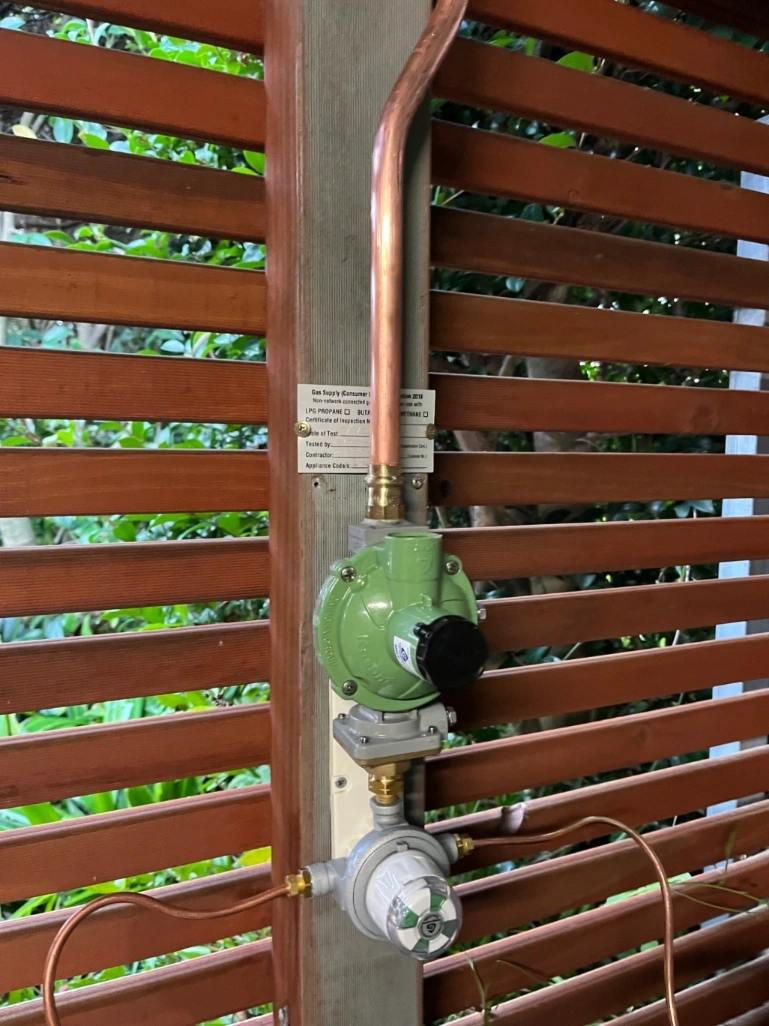
The gas installation was also upgraded with a new automatic LPG regulator to provide safe and consistent gas pressure to the appliance.
Why the LPG Regulator Is So Important
The regulator is one of the most important parts of any LPG installation, yet it's something most homeowners rarely think about.
LPG is stored under much higher pressure inside gas cylinders than the appliance can safely use.
The regulator's job is to reduce and stabilise that pressure before the gas reaches the hot water system.
Without a correctly operating regulator, appliances may experience:
- Ignition problems
- Inconsistent burner performance
- Poor hot water delivery
- Reduced efficiency
- Increased wear on components
Whenever we install a new LPG appliance, we assess the condition and suitability of the existing gas controls to ensure the entire system is operating safely—not just the appliance itself.
More Than Just Hanging a New Hot Water Unit
Installing a continuous flow hot water system involves far more than mounting a unit on the wall.
For this project our team:
- Safely isolated the existing gas and water supplies.
- Removed and disposed of the old storage hot water system.
- Installed new copper gas, hot and cold water pipework.
- Fitted a new automatic LPG regulator.
- Coordinated electrical works for a compliant weatherproof GPO.
- Installed a new gas compliance plate.
- Pressure tested both gas and water services.
- Commissioned the new Rinnai system to verify reliable operation.
Every stage of the installation was completed in accordance with Australian Standards and manufacturer requirements before the system was placed into service.
Why Gas Compliance Matters
Whenever gas appliances are installed or altered, compliance isn't simply paperwork—it's an important part of ensuring the installation is safe.
Following installation, gas pipework is pressure tested, appliance operation is checked and all gas connections are inspected for leaks.
A gas compliance plate is also installed to record that licensed gas fitting work has been completed.
These final checks provide confidence that the system has been installed correctly and is operating safely before being handed over to the homeowner.
Is an LPG Continuous Flow System Right for Every Home?
Not necessarily.
Choosing the right hot water system depends on several factors, including:
- Whether natural gas is available.
- The size of the household.
- Peak hot water demand.
- Available installation space.
- Existing gas infrastructure.
For many homes without access to reticulated natural gas, an LPG continuous flow system offers an excellent balance of performance, efficiency and convenience.
The Rinnai 32 installed for this project is designed to provide a strong, reliable supply of hot water for larger households while taking up significantly less space than a traditional storage tank.
Continuous Flow LPG Hot Water Installation in Glenhaven
Following installation, the entire system was tested, commissioned and cleaned before being handed back to the homeowner.
The result is a modern LPG hot water system designed to deliver reliable hot water on demand while improving energy efficiency and making better use of the available outdoor space.
Pure Plumbing Professionals installs and replaces LPG and natural gas hot water systems throughout Glenhaven and surrounding suburbs, including:
- Continuous Flow Hot Water Installation
- Rinnai Hot Water Systems
- LPG Hot Water Systems
- Gas Plumbing
- Copper Pipework Installation
- Hot Water System Replacement
Whether you're replacing a failed storage tank or upgrading to a continuous flow LPG system, our licensed plumbers can recommend the right solution for your home and ensure every installation is completed safely and professionally.
