

Repairing Damaged Sewer Infrastructure with Excavation, Safety Controls and Structural Pipe Relining
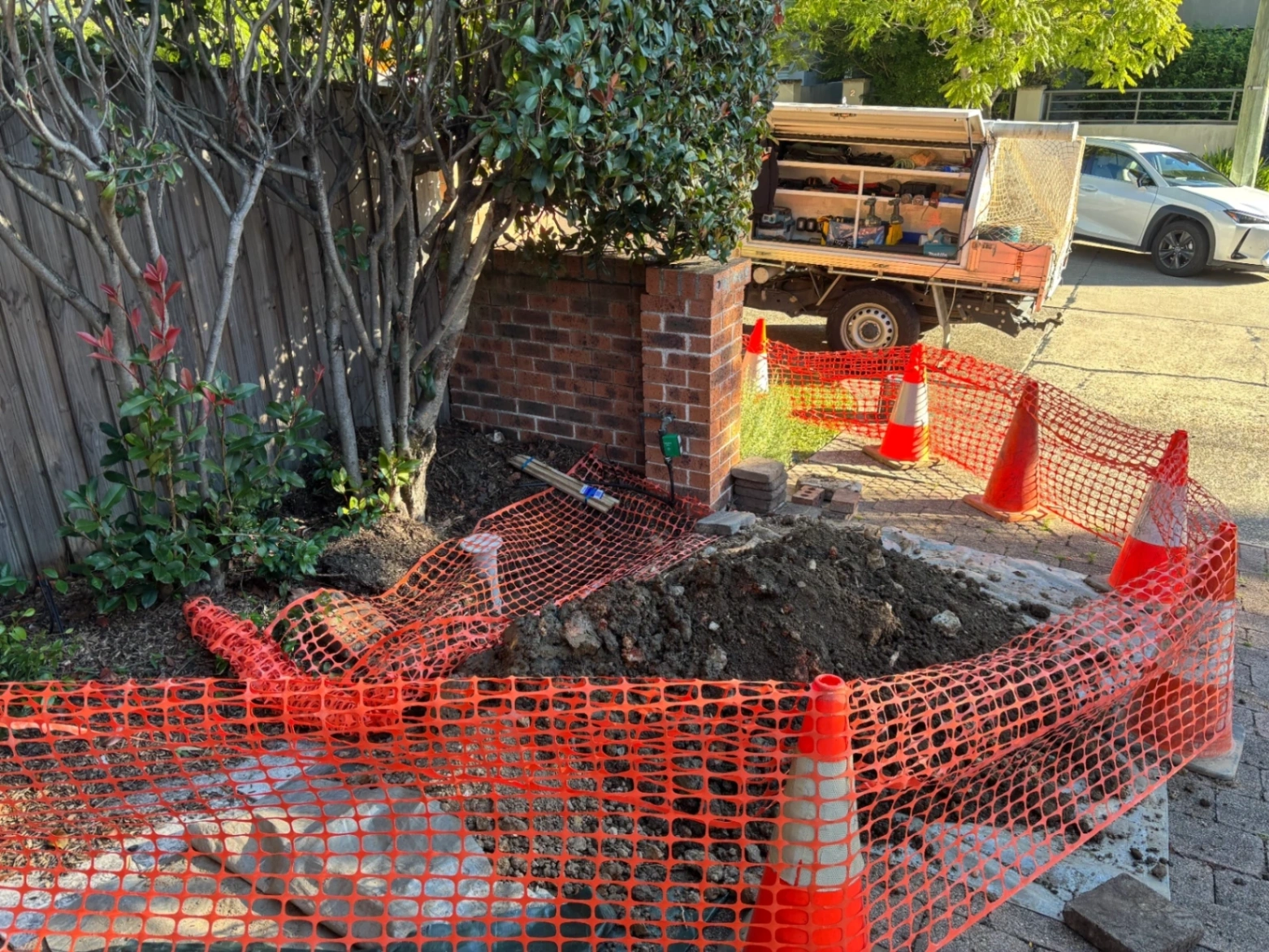
Our team attended a property in Chatswood to carry out major sewer repair works involving excavation, boundary trap replacement, and structural epoxy pipe relining. This was not a simple blocked drain job. The drainage system required detailed investigation, safe access, cleaning, relining, and post-repair testing to confirm the sewer line was operating correctly.
Most homeowners do not call a plumber asking for sewer pipe relining. They usually call because something is not draining properly, a toilet is backing up, there is a sewer smell, or wastewater is not leaving the property the way it should.
For this project, Pure Plumbing Professionals completed the work in stages. The team first made the site safe, located underground services, excavated to reach the sewer infrastructure, cleaned and inspected the line, installed new access points, replaced the defective boundary trap, and used epoxy pipe relining to restore the damaged section without replacing the full pipe run.
Symptoms That Usually Point to a Sewer Line Issue
Sewer pipe damage often shows up as everyday drainage problems inside or around the property.
Common symptoms include slow toilets, gurgling drains, wastewater backing up, sewer odours, or outdoor overflow near inspection points. Sometimes only one fixture appears affected at first, but the real issue is further down the sewer line.
When the main sewer line is damaged, blocked, or affected by roots, wastewater cannot move away from the property properly. That can cause pressure to build in the system, leading to repeated blockages or surcharge.
This is why a proper CCTV Drain Inspection is so important. It allows plumbers to see what is happening inside the pipe instead of guessing from surface symptoms.
Why Damaged Sewer Pipes Need Proper Investigation
A sewer blockage can often be cleared with water jetting, but clearing the blockage does not always fix the cause.
In many older sewer systems, the deeper issue may be cracked pipework, root intrusion, poor fall, damaged joints, or a defective boundary trap. If those issues are not repaired, the blockage is likely to return.
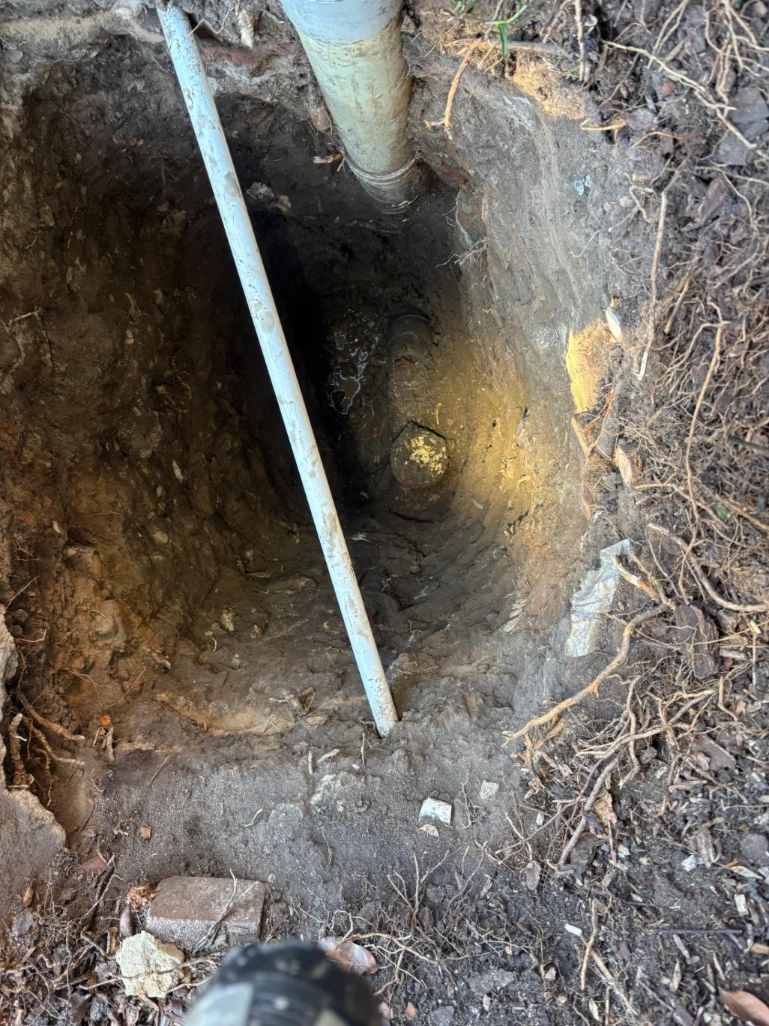
At this Chatswood property, the drainage infrastructure required both internal repair and physical replacement of defective components. That meant the job needed a combination of Sewer Repairs, Drain Cleaning, CCTV inspection, excavation, and Pipe Relining.
Safety Planning Before Excavation
Before digging started, the team carried out service location checks, commonly known as Dial Before You Dig or Before You Dig Australia checks.
This process helps identify underground services that may be running through or near the excavation area. These can include water pipes, gas lines, electrical conduits, sewer assets, stormwater lines, and telecommunications cables.
For a homeowner, this step matters because digging without knowing what is underground can be dangerous. It can also damage essential services and create much larger repair costs.
On this job, safety barriers, signage, temporary fencing, and barricades were also set up around the work area. Because the excavation reached approximately 1.8 metres deep, shoring was installed to support the sides of the excavation and reduce the risk of collapse.
What Excavation Actually Involves
Excavation is more than simply digging a hole.
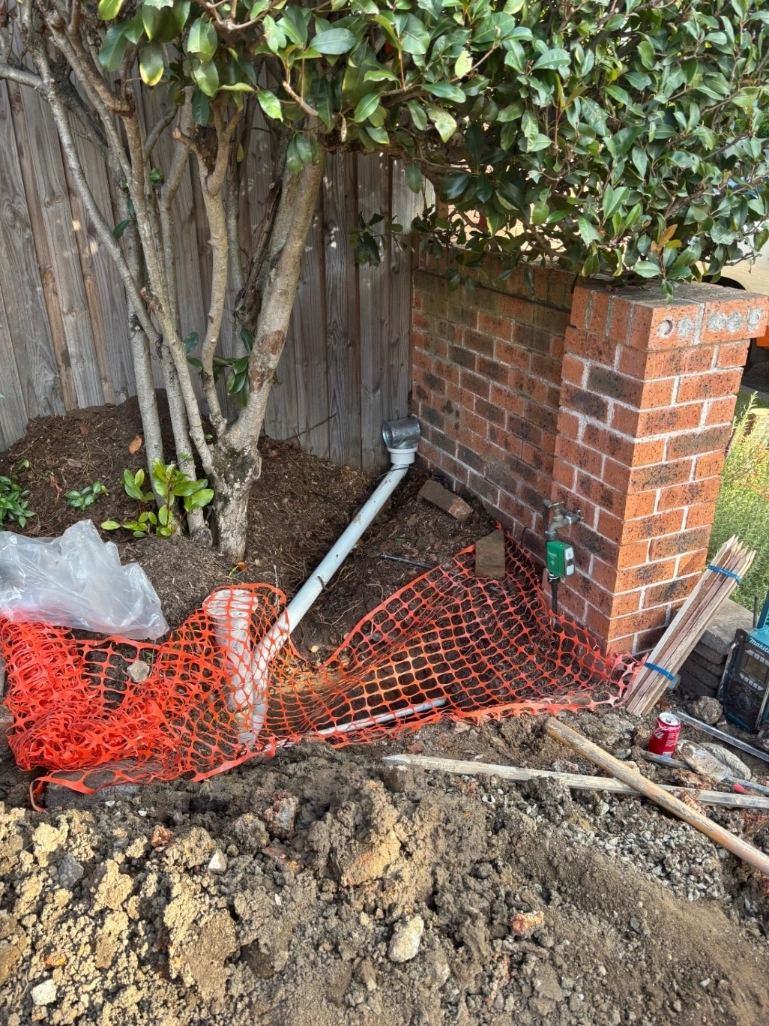
For sewer repair work, excavation involves carefully opening the ground to expose the pipe while protecting nearby services, structures, and workers. The team needs to dig to the correct depth, maintain a safe working area, manage spoil, and create enough room to work around the pipe.
In this case, excavation was required to access the damaged sewer line and boundary trap area. Once exposed, the team could install new inspection openings, replace defective components, and prepare the line for relining access.
After the repair work was completed, the excavation was backfilled and compacted in layers. This helps reduce future ground settlement and protects the repaired sewer infrastructure.
Cleaning the Sewer Line Before Relining
Before a sewer pipe can be relined, the inside of the pipe must be properly cleaned.
Pure Plumbing Professionals used high-pressure water jetting and mechanical cleaning to remove debris, roots, and obstructions from the sewer line. This step is critical because the epoxy liner needs a clean internal pipe surface to bond and cure correctly.
If roots, sludge, or loose material are left inside the pipe, the liner may not sit properly. Good preparation is one of the main reasons pipe relining lasts.
Why Epoxy Pipe Relining Was the Right Choice
Epoxy pipe relining was suitable for this project because the damaged section of sewer pipe could be structurally restored from the inside without replacing the full pipe run.
The process works by installing a resin-saturated liner inside the existing pipe. Once positioned, the liner is expanded against the pipe wall and left to cure. After curing, it forms a new internal pipe surface inside the old pipe.
For this Chatswood sewer repair, around 5–6 metres of structural epoxy relining was installed. This method was the right choice because it allowed the team to restore the damaged section while reducing the amount of excavation needed.
Pipe Relining is especially useful when sewer damage runs beneath difficult areas, close to structures, or where full replacement would create unnecessary disruption.
Boundary Trap Replacement
The boundary trap is an important part of the property’s sewer connection. It sits near the boundary and forms part of the transition between the private sewer system and the wider sewer network.
At this property, the existing boundary trap was defective and required replacement.
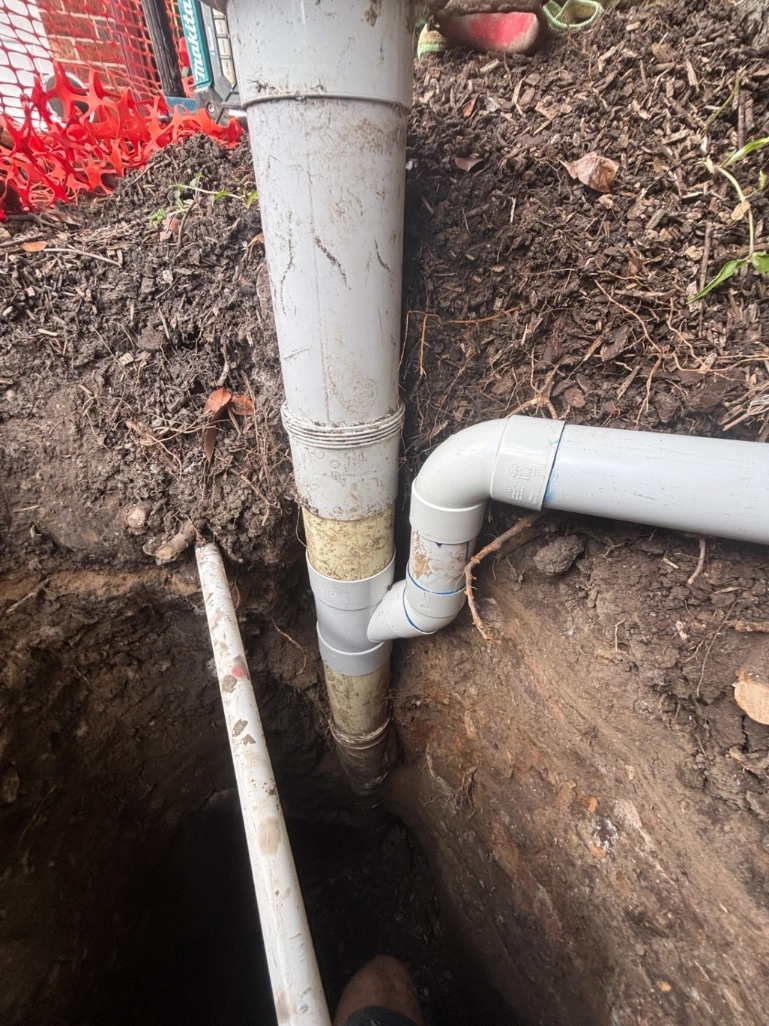
The team excavated around the boundary trap, isolated the sewer line, removed the damaged components, and installed a new boundary trap with associated pipework. The installation was completed with correct drainage fall and in line with AS/NZS 3500 requirements.
Correct fall is essential because sewer systems rely on gravity. If the pipe is too flat, wastewater can sit in the line. If the fall is wrong, solids can build up and cause recurring blockages.
New Inspection Openings for Future Maintenance
New inspection openings were installed to provide better access to the sewer line.
Inspection openings are access points that allow plumbers to inspect, clean, and maintain the drainage system in the future. They can also make future CCTV inspections easier and reduce the need for unnecessary digging.
This is a practical upgrade because sewer systems should not only be repaired for today. They should also be made easier to maintain later.
Post-Installation CCTV Inspection
Once the pipe relining was completed, the team did not simply pack up and leave.
A post-installation CCTV Drain Inspection was carried out to confirm the relined pipe was in good condition. This inspection checks that the liner has cured correctly, the internal pipe surface is smooth, and the repaired section is clear.
This step is important because it verifies the quality of the repair. It also confirms that wastewater can move through the system properly after the work is complete.
For major sewer repairs, this final camera inspection is one of the best ways to confirm the job has been completed properly.
Testing, Backfilling and Site Reinstatement
After the relining and boundary trap replacement were completed, the sewer system was tested for leaks, flow, and correct operation.
The excavation was then backfilled and compacted in layers to reduce the chance of future subsidence. Affected surfaces were reinstated, spoil was removed from site, and the work area was cleaned.
This final stage matters because underground sewer work needs to be structurally sound below ground and properly finished at surface level.
What Most Homeowners Don’t Realise About Sewer Repairs
Many sewer issues start as a simple blocked drain callout, but the real cause can be deeper underground.
A toilet may block because roots have entered the sewer line. A drain may gurgle because the main pipe has poor fall. A sewer smell may appear because the boundary trap or underground pipework is damaged.
That is why professional drainage work needs more than just clearing the line. It requires diagnosis, cleaning, repair, testing, and confirmation.
When Sewer Pipe Relining and Boundary Trap Replacement Are Needed
This type of work is usually required when a sewer system has recurring blockages, damaged underground pipework, tree root intrusion, failed access points, or a defective boundary trap.
It may also be required when CCTV inspection shows that clearing alone will not provide a long-term fix.
For properties in Chatswood, where older sewer infrastructure and established trees are common, combining excavation with Pipe Relining can be an effective way to repair damaged systems while limiting unnecessary disruption.
Sewer Pipe Relining and Drainage Services in Chatswood
Pure Plumbing Professionals provides sewer repair and drainage services across Chatswood and surrounding Sydney suburbs.
Services include Pipe Relining, Sewer Repairs, CCTV Drain Inspection, Drain Cleaning, boundary trap replacement, excavation plumbing, and long-term Drainage Solutions.
Each project is approached with a focus on safety, accurate diagnosis, and proper confirmation after the repair is complete.
If you are experiencing recurring sewer blockages, slow drains, toilet backups, or signs of sewer overflow, a professional inspection can identify what is happening underground.
Call 0483 915 451 to speak with our team or click Book Now to arrange an inspection.
