

Why a Rainwater Tank Is Only As Good As The Drainage System Behind It
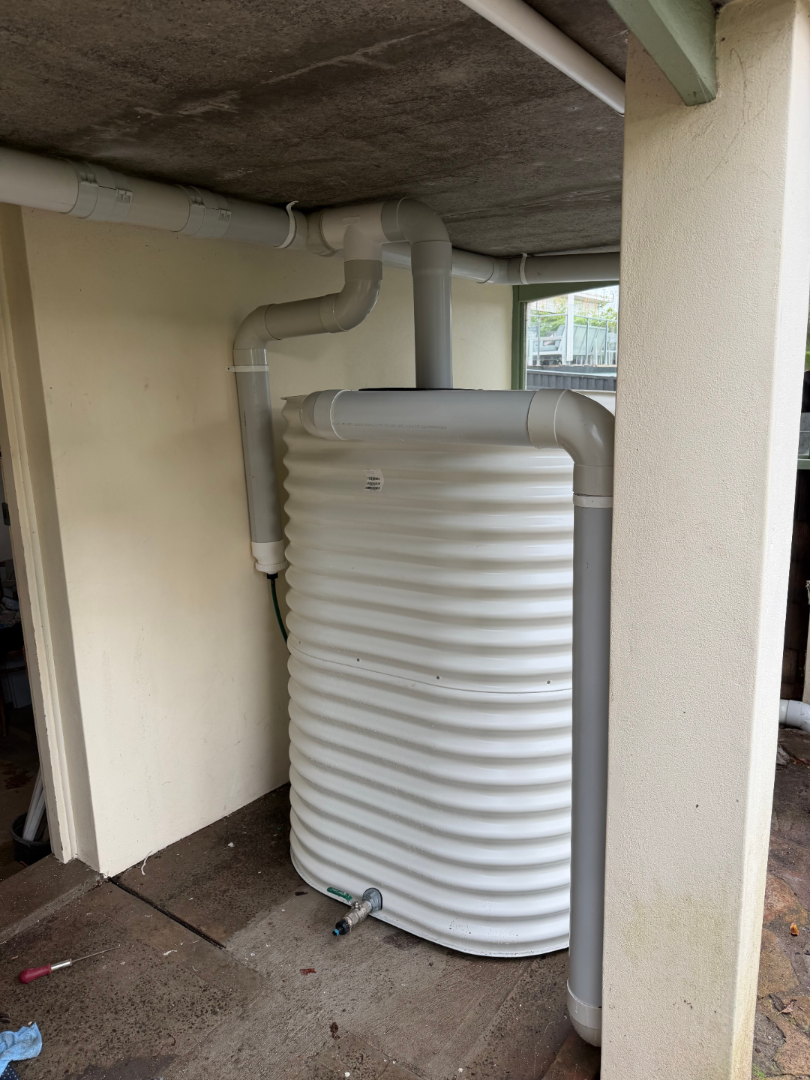
Our team attended a property in Lilli Pilli to complete a major stormwater drainage and rainwater harvesting project, designed to improve roof water management, reduce stormwater runoff, and provide a sustainable source of stored rainwater for future use.
The project involved the installation of new downpipes, underground stormwater drainage, a 4000L rainwater tank, and a large absorption trench system to manage overflow water during heavy rainfall events.
Many homeowners view rainwater tanks simply as storage containers. In reality, a properly designed Rainwater Harvesting System is an integrated drainage solution that captures, stores, filters, distributes, and safely manages excess water when the tank reaches capacity.
For this Lilli Pilli property, Pure Plumbing Professionals installed a complete system designed to manage roof water from collection right through to final discharge.
Why Rainwater Harvesting Is Becoming More Popular
Every time it rains, thousands of litres of water can fall onto a residential roof.
Without a collection system, this water simply enters the stormwater network and leaves the property.
A Rainwater Tank Installation allows homeowners to capture part of that water for future use while reducing the volume entering the stormwater system.
Common uses for harvested rainwater include:
- Garden irrigation
- Lawn watering
- Washing vehicles
- General outdoor use
- Supplementary household water supply (where permitted)
In addition to water storage benefits, rainwater harvesting can help reduce pressure on stormwater infrastructure during major rainfall events.
Upgrading Roof Water Collection with New Downpipes
A rainwater harvesting system is only as effective as its collection points.
As part of the project, the existing downpipes were removed and replaced with five new PVC downpipes, providing approximately sixteen metres of upgraded roof water collection infrastructure.
Many older drainage systems struggle because roof water is concentrated into too few collection points.
Installing additional or upgraded downpipes helps:
- Improve water capture efficiency
- Reduce gutter overflow
- Improve stormwater performance
- Increase the volume of water directed to the rainwater tank
At Pure Plumbing Professionals, Downpipe Replacement is often a critical part of larger Stormwater Drainage Installation projects because it ensures roof water reaches the storage system efficiently.
Installing the Underground Stormwater Network
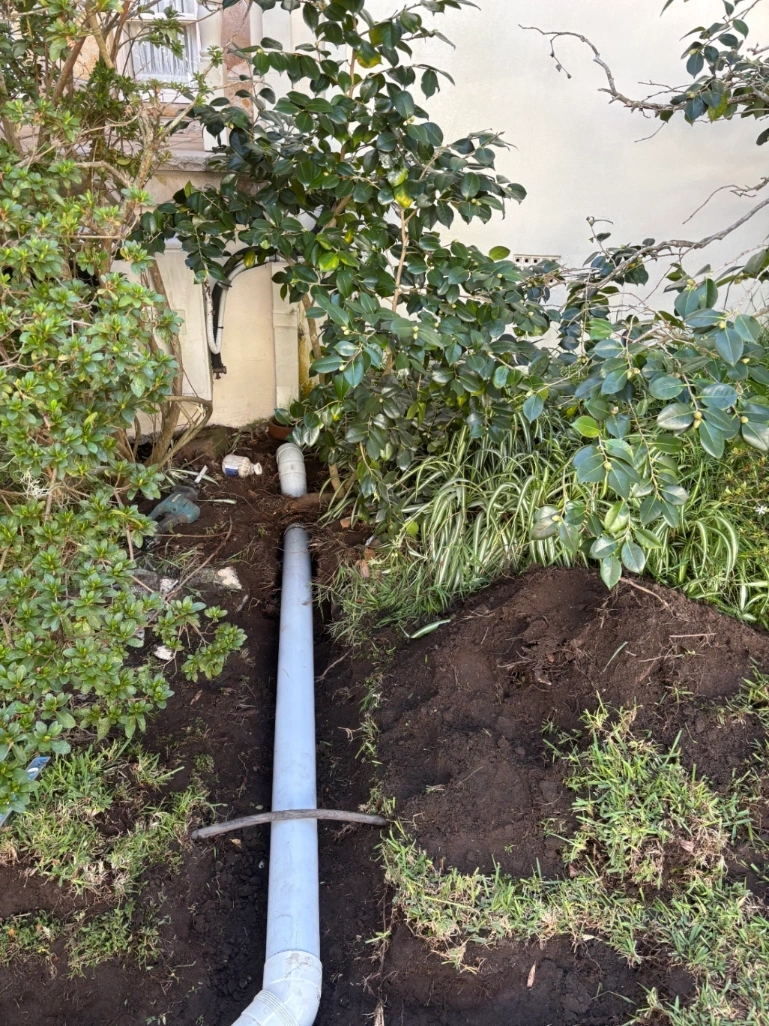
Once the roof collection system was upgraded, new underground stormwater pipework was installed throughout the property.
Approximately 57 metres of 100mm PVC stormwater pipework was supplied and installed to transport collected roof water from the downpipes to the rainwater storage system.
Underground drainage infrastructure performs several important functions:
- Transfers water from collection points
- Prevents surface ponding
- Protects landscaping
- Directs overflow safely
- Integrates multiple drainage components into a single system
Proper pipe sizing, alignment, and drainage falls are essential to ensure the system continues performing during heavy rainfall.
Installing the 4000L Rainwater Tank
At the centre of the project was the installation of a new 4000L Colorbond corrugated steel rainwater tank.
Rainwater tanks are designed to temporarily store roof runoff so it can be used later rather than immediately entering the stormwater system.
The tank installed for this project included:
- First flush diverter
- Leaf strainer
- Drain valve
- Overflow pipework
These components all play important roles in maintaining water quality and system performance.
What Does a First Flush Diverter Do?
One of the most important components of a Rainwater Harvesting System is the first flush diverter.
Many homeowners have never heard of this device.
When rain first falls onto a roof, it often washes:
- Dust
- Leaves
- Bird droppings
- Pollen
- Debris
from the roof surface.
The first flush diverter captures and discards this initial runoff before cleaner water enters the tank.
This helps improve the quality of the stored rainwater and reduces sediment accumulation within the tank.
Why Leaf Strainers Are Important
A leaf strainer was also installed as part of the rainwater collection system.
Leaf strainers act as a filtration point before water enters the tank.
They help prevent:
- Leaves entering the tank
- Organic debris accumulation
- Blockages within pipework
- Reduced system performance
Keeping debris out of the storage system helps reduce maintenance requirements and improve the lifespan of the installation.
What Happens When the Rainwater Tank Fills Up?
One of the biggest misconceptions homeowners have is that rainwater tanks solve all stormwater problems.
In reality, every tank eventually reaches capacity during heavy rainfall.
This is why overflow management is just as important as water storage.
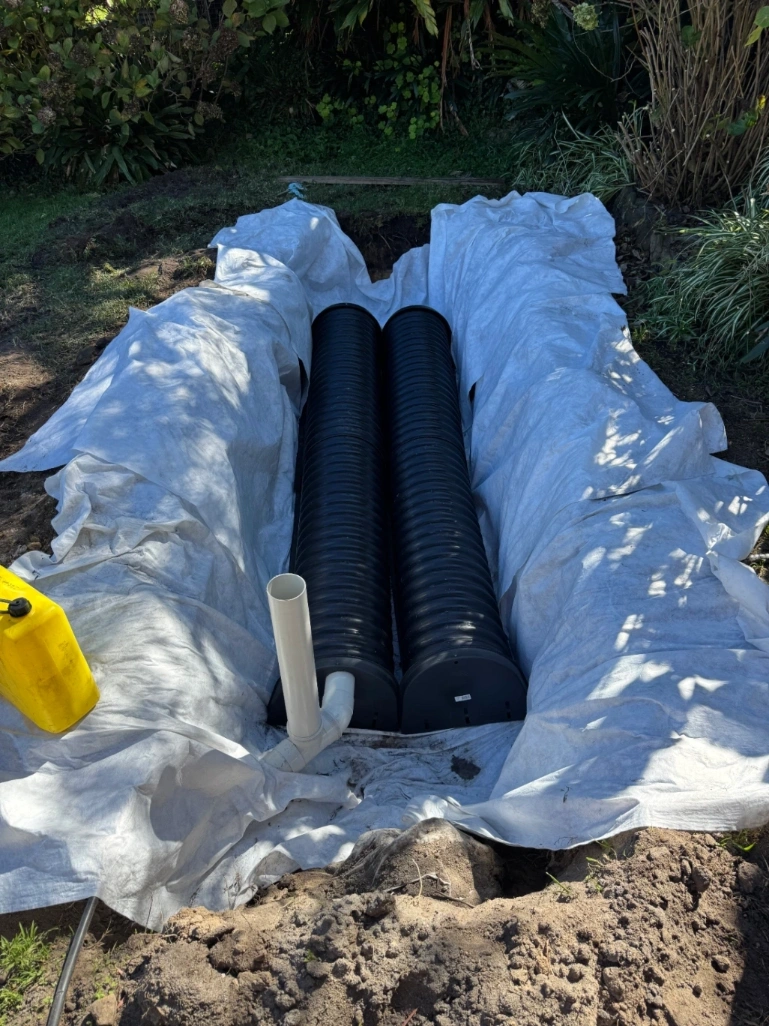
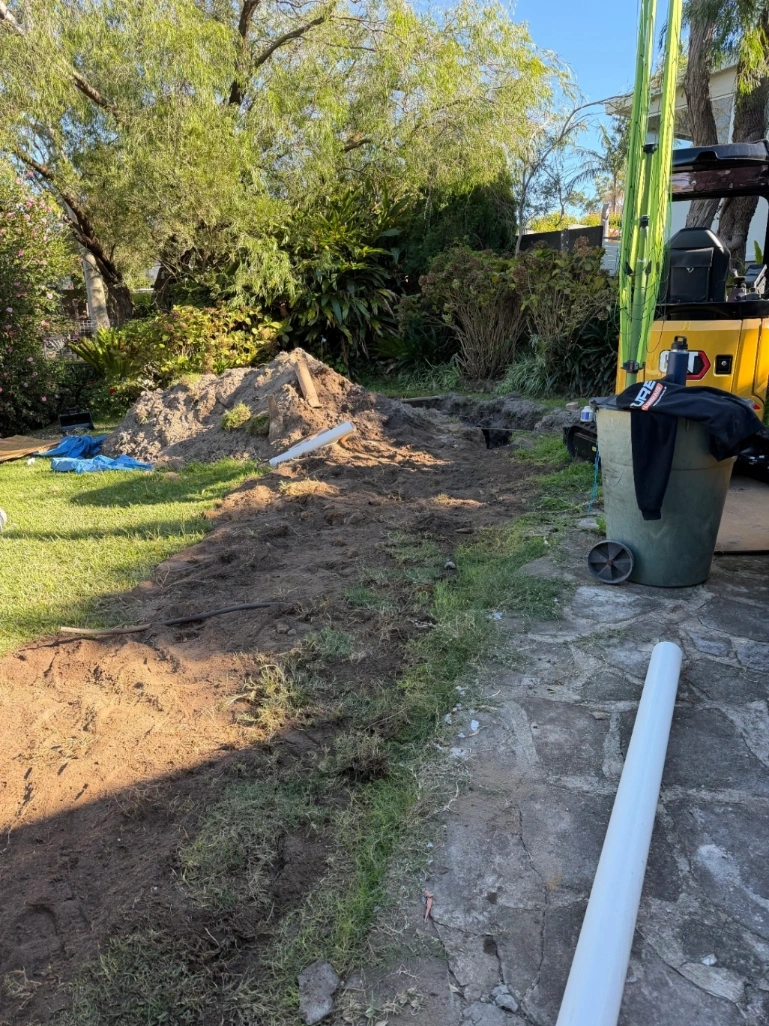
For this project, a dedicated stormwater absorption trench was constructed to safely manage overflow water once the tank becomes full.
Why an Absorption Trench Was Installed
The rear yard received a large stormwater absorption trench measuring approximately:
- 70cm deep
- 2 metres wide
- 7 metres long
Absorption trenches are designed to disperse excess water back into the surrounding soil rather than concentrating it in one location.
This helps:
- Reduce surface water accumulation
- Minimise erosion
- Improve groundwater recharge
- Prevent overloading of stormwater infrastructure
Think of the absorption trench as a backup drainage system that activates whenever the rainwater tank reaches capacity.
How Geotextile Fabric Improves Drainage Performance
The absorption trench was wrapped in geotextile fabric before being backfilled.
Geotextile fabric acts as a filtration layer that prevents soil from entering the drainage media while still allowing water to pass through.
Without geotextile protection, fine soil particles can gradually clog the trench and reduce its effectiveness.
Using geotextile fabric helps maintain long-term drainage performance and extends the life of the absorption system.
Why Blue Metal Aggregate Was Used
The trench was backfilled using blue metal aggregate.
This material creates large void spaces between stones that allow water to move and disperse efficiently.
Compared to ordinary soil, blue metal provides:
- Superior drainage performance
- Greater storage volume
- Improved groundwater infiltration
- Reduced risk of compaction
This makes it one of the most commonly used materials in professional Absorption Trench installations.
Testing and Commissioning the System
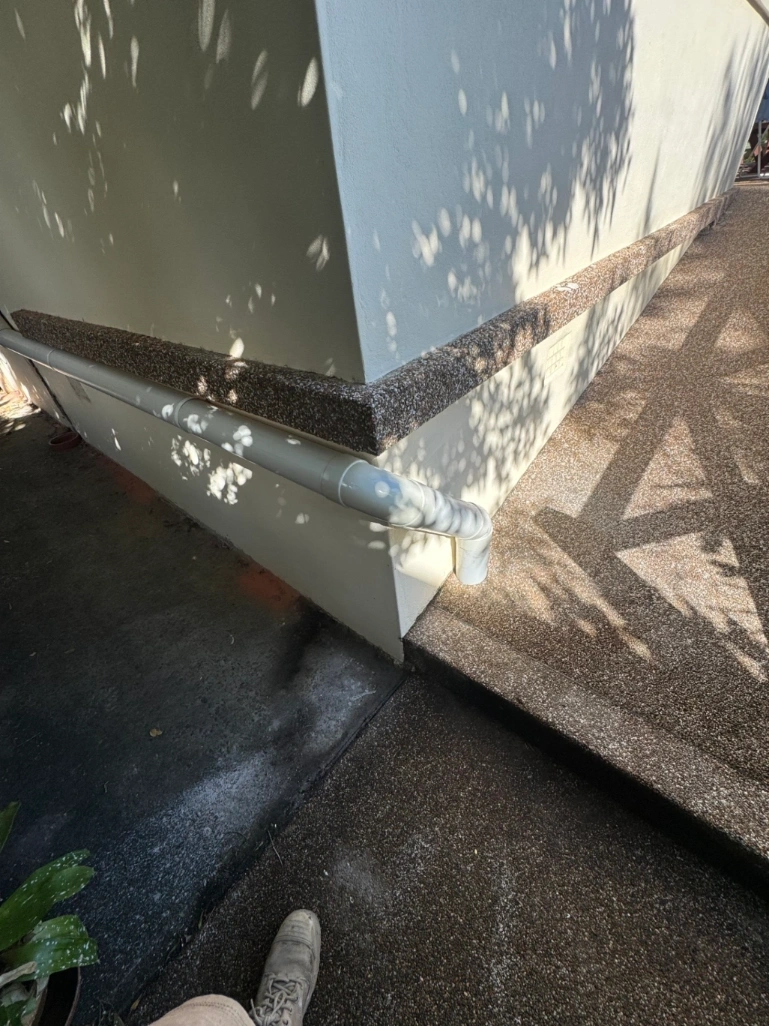
Once all components were installed, the entire rainwater harvesting and stormwater drainage system was tested and commissioned.
This included verification of:
- Downpipe performance
- Stormwater pipe flow
- Tank operation
- Overflow functionality
- Absorption trench performance
- Overall drainage efficiency
Testing ensures every part of the system works together as intended before handover.
Why a Rainwater Tank Is Only As Good As the Drainage System Behind It
Many homeowners focus on the size of the rainwater tank when planning a rainwater harvesting project.
However, the most important part of the installation is often the drainage system connected to it.
A rainwater tank can only store a finite amount of water. During a major rainfall event, even a large 4000L tank can fill quickly. Once the tank reaches capacity, every additional litre of water still needs somewhere to go.
Without a properly designed drainage system, this excess water can create a range of problems including:
- Water pooling around the home
- Saturated garden beds
- Soil erosion
- Damage to landscaping
- Increased groundwater pressure
- Water ingress around footings and structures
This is why professional Rainwater Tank Installation should always be viewed as part of a larger Stormwater Drainage system rather than a standalone water storage solution.
The Purpose of Stormwater Drainage Is To Protect The Property
Many people think stormwater drainage simply moves rainwater from one location to another.
In reality, a properly designed drainage system protects some of the most important parts of the property.
Every rainfall event introduces large volumes of water onto the site. Without controlled collection and discharge, that water will naturally follow the easiest path across and through the property.
Over time this can lead to:
- Foundation movement
- Soil instability
- Retaining wall pressure
- Water ingress into buildings
- Premature deterioration of external surfaces
The role of stormwater pipework is to collect water quickly and transport it safely away from these vulnerable areas before problems develop.
For this Lilli Pilli project, approximately 57 metres of new PVC stormwater pipework was installed to ensure water could be efficiently captured and transferred throughout the system.
Why Overflow Management Is Just As Important As Water Storage
One of the most common mistakes in DIY rainwater harvesting projects is focusing entirely on storing water while overlooking what happens when the tank becomes full.
Every rainwater tank requires a properly designed overflow strategy.
Once the storage capacity is reached, incoming water must continue moving through the drainage system without causing flooding or water build-up around the property.
This is exactly why the absorption trench formed such an important part of this installation.
Rather than allowing overflow water to discharge onto the surface, the trench provides a controlled area where water can slowly infiltrate back into the surrounding soil.
This helps maintain the performance of the entire drainage network during heavy rainfall events.
Good Drainage Is About Managing Water Before It Becomes A Problem
One of the biggest misconceptions homeowners have is that drainage systems are only needed once flooding or pooling starts occurring.
In reality, the best drainage systems are rarely noticed because they are preventing problems before they occur.
A properly designed stormwater system helps manage:
- Roof water
- Surface runoff
- Tank overflow
- Groundwater movement
- Saturated soil conditions
All of these elements work together to protect the home and surrounding landscape.
For this reason, projects such as this one in Lilli Pilli are not simply rainwater tank installations. They are complete water management systems designed to collect, store, transport, disperse, and control water across the entire property.
Rainwater Tank and Stormwater Services in Lilli Pilli
Properties throughout Lilli Pilli can benefit from integrated rainwater harvesting and stormwater management systems, particularly where water conservation and runoff management are priorities.
The team at Pure Plumbing Professionals provides:
- Rainwater Tank Installation
- Rainwater Harvesting Systems
- Stormwater Drainage Installation
- Downpipe Replacement
- Absorption Trenches
- Sustainable Water Management Solutions
Every system is designed to improve water collection, stormwater performance, and long-term property drainage outcomes.
If you're considering a rainwater tank, stormwater upgrade, or water harvesting solution, our team can help design a system that suits your property's needs.
Call 0483 915 451 to speak with our team or click Book Now to arrange an inspection.
