

Managing Groundwater Before It Becomes a Water Ingress Problem
Our team attended a property in Avalon Beach to install a comprehensive groundwater management and stormwater drainage system, designed to intercept subsurface water movement, capture surface runoff, and safely discharge collected water into the existing stormwater network.
Unlike many drainage projects that focus solely on surface water, this installation was primarily about controlling groundwater. The property was experiencing water pooling within the lawn area where groundwater was naturally surfacing after rainfall. Water was also migrating from the uphill side of the block toward the dwelling, creating ongoing moisture management concerns.
To address the issue properly, Pure Plumbing Professionals designed and installed a drainage solution that combined surface collection, subsoil drainage, stormwater pipework, overflow protection, and connection into the existing drainage infrastructure.
Understanding Groundwater and Why It Causes Problems
Most homeowners are familiar with stormwater because they can see it during rain.Groundwater is different.
Groundwater exists below the surface and moves through soil long after rainfall has stopped. Depending on the property's topography, soil conditions, and surrounding environment, groundwater can continue travelling downhill and accumulate around structures, retaining walls, gardens, and footings.
Common signs of groundwater problems include:
- Constantly wet lawn areas
- Boggy or saturated ground
- Water seeping from retaining walls
- Damp subfloor areas
- Water pooling despite no recent rainfall
- Persistent moisture around foundations
In areas such as Avalon Beach, where many properties are positioned on sloping blocks, groundwater management often becomes just as important as traditional stormwater drainage.
Why Groundwater Management Requires More Than One Drain
One of the biggest misconceptions homeowners have is that a single drain will solve a groundwater problem.
In reality, groundwater management works best when multiple drainage components work together as a complete system.
For this project, the solution needed to:
- Capture groundwater beneath the surface
- Collect water emerging from the retaining wall area
- Transport water away efficiently
- Prevent future surface pooling
- Provide overflow protection
- Integrate with the property's existing stormwater infrastructure
This is why the project involved several different drainage elements working together rather than relying on a single collection point.
Capturing Water Where It First Appears
The investigation identified an area within the lawn where groundwater was naturally surfacing and causing ongoing pooling.
The first step involved excavating the affected section and installing a dedicated surface collection drain.
Surface collection drains play an important role because they capture water immediately after it reaches the surface rather than allowing it to spread across the property.
Without collection points, groundwater can create:
- Muddy lawn areas
- Erosion
- Landscape damage
- Ongoing saturation of surrounding soil
Capturing water early helps reduce the overall volume of moisture moving through the property.
Why AG Drains Are So Effective for Groundwater Problems
A key component of the project was installation of an agricultural drain, commonly referred to as an AG drain. AG drains are specifically designed to intercept groundwater before it reaches the surface. Unlike standard stormwater pipes, AG drains contain perforations that allow groundwater to enter the drainage system from the surrounding soil.
For this Avalon Beach property, the AG drain was installed along the retaining wall where groundwater movement was occurring. This allowed the system to collect water beneath the surface before it could build up pressure behind the wall or migrate into other parts of the property.
AG Drain Installation is one of the most effective solutions for properties experiencing ongoing groundwater issues because it addresses the source of the problem rather than simply managing the symptoms.
Why Retaining Walls Often Become Groundwater Collection Points
Retaining walls frequently reveal groundwater issues because they interrupt the natural movement of water through the soil.
As water moves downhill underground, it often encounters the retaining wall and begins accumulating behind it.
This can create:
- Water seepage through the wall
- Increased hydrostatic pressure
- Soil saturation
- Surface pooling nearby
Installing subsoil drainage along the retaining wall allows this water to be intercepted and redirected before it causes damage or ongoing moisture problems.
Creating a Dedicated Stormwater Discharge System
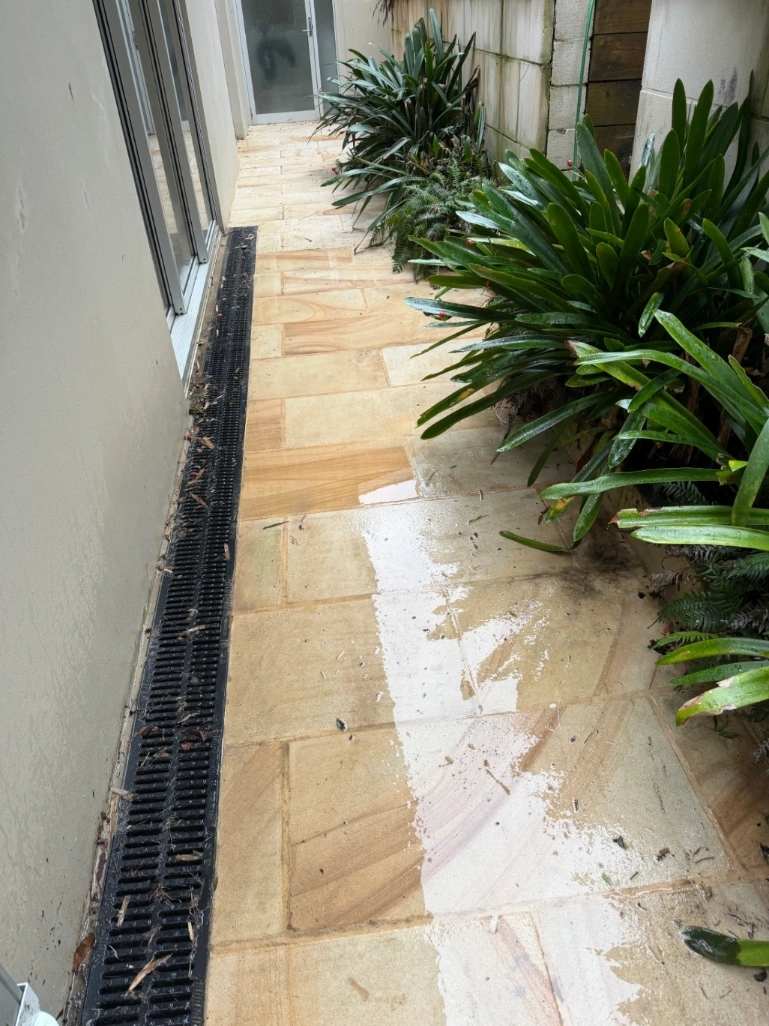
Once the groundwater was collected, it needed somewhere to go. A new PVC stormwater drainage line was installed to act as the primary discharge system for the entire project.This pipework forms the backbone of the drainage network. Its role is to safely transport collected water away from the affected area and into the property's approved stormwater infrastructure. Without a properly sized discharge system, even the best groundwater collection system will eventually become overwhelmed. This is why groundwater collection and stormwater discharge must always be considered together.
Connecting Multiple Collection Points Into One System
One of the strengths of this installation was the way multiple collection points were integrated into a single drainage network.
The AG drain was connected into the main PVC drainage line at several locations to maximise groundwater capture.
This approach helps:
- Improve drainage efficiency
- Reduce localised saturation
- Capture water across a larger area
- Increase overall system performance
Rather than relying on a single entry point, the drainage network can collect groundwater wherever it is encountered along the trench.
Why Blue Metal Aggregate Is Used Around Drainage Systems
Once the drainage infrastructure was installed, the trenches were backfilled with blue metal aggregate.
Many homeowners assume the aggregate is simply used to fill the hole.
In reality, it is a critical part of the drainage system.
Blue metal creates open spaces between the stones, allowing groundwater to move freely toward the AG drain.
This improves:
- Groundwater collection
- Water filtration
- Drainage efficiency
- Long-term performance
Without aggregate, water movement through the surrounding soil becomes much slower and less effective.
Why Overflow Protection Was Included
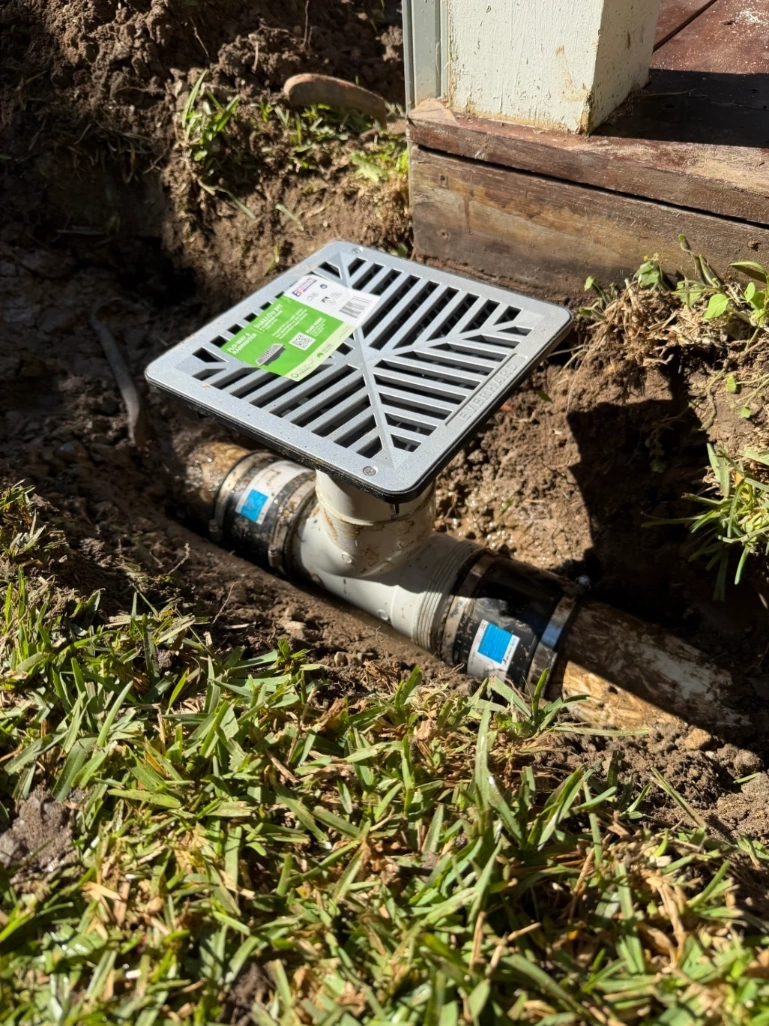
Another important component of the project was the installation of a surface relief riser and grated collection point.
This acts as an overflow protection mechanism for the drainage system.
If the easement drainage system ever becomes blocked or restricted, the relief point allows excess water to surface safely rather than backing up underground.
Think of it as a safety valve for the drainage network.
This type of protection can help prevent:
- Hidden system overload
- Groundwater backup
- Drainage failures
- Unexpected flooding during major rainfall events
Connecting Into the Existing Easement Drainage System
To complete the installation, additional trenching was carried out to connect the new drainage network into the existing easement stormwater system.
This final connection provides the discharge point for all collected groundwater and surface runoff.
A drainage system is only as effective as its final outlet.
Proper connection into the existing stormwater infrastructure ensures water collected throughout the property can be safely transported away without causing issues elsewhere on the site.
Why This Was Really a Groundwater Management Project
While the project involved stormwater pipework, collection drains, and trenching, the real objective was groundwater control.
The completed system now performs several functions simultaneously:
- Captures groundwater beneath the surface
- Intercepts water behind the retaining wall
- Collects surface runoff
- Relieves hydrostatic pressure
- Prevents water pooling
- Provides overflow protection
- Safely discharges water into the stormwater network
This holistic approach is often the most effective way to solve ongoing drainage issues because it addresses how water behaves across the entire property rather than focusing on a single symptom.
What Most Homeowners Don't Realise About Groundwater
Many people assume water problems only occur when it rains.
However, groundwater can continue moving through soil for days or even weeks after rainfall has ended.
This is why properties sometimes remain wet despite clear weather.
Without a properly designed Subsoil Drainage system, groundwater will always follow the path of least resistance. Unfortunately, that path often leads toward retaining walls, footings, subfloors, and other vulnerable areas of the property.
The goal of drainage design is to give water a better path to follow.
Groundwater and Drainage Solutions in Avalon Beach
Properties throughout Avalon Beach often experience unique drainage challenges due to sloping land, established landscaping, and varying soil conditions.
The team at Pure Plumbing Professionals provides:
- Subsoil Drainage
- AG Drain Installation
- Groundwater Management
- Surface Water Collection Drains
- Stormwater Drainage Installation
- Water Ingress Prevention Solutions
Every drainage system is designed to work with the property's natural conditions while providing long-term moisture and groundwater control.
If you're experiencing water pooling, saturated ground, retaining wall seepage, or ongoing moisture issues around your property, a professional drainage assessment can help identify the cause and develop a long-term solution.
Call 0483 915 451 to speak with our team or click Book Now to arrange an inspection.
