

Improving Roof Water Collection with New Downpipes and Underground Stormwater Connections
Our team attended a property in North Kellyville to install additional downpipes and underground stormwater drainage connections, helping improve roof water collection and ensuring rainwater was discharged efficiently into the existing stormwater network.
As homes are extended, outdoor areas are added, or roof drainage requirements change over time, the original downpipe layout may no longer be sufficient to handle heavy rainfall. Installing additional downpipes is often one of the most effective ways to improve stormwater performance and reduce pressure on existing gutters and drainage infrastructure.
For this project, Pure Plumbing Professionals installed two new downpipes, connected them into the underground stormwater system, and upgraded the property's overall roof drainage capacity.
Why Downpipes Are So Important to a Stormwater System
Most homeowners pay attention to gutters but often overlook the importance of downpipes.
A gutter can only collect water. The downpipe is responsible for moving that water safely from the roof into the stormwater drainage system.
If there are not enough downpipes, or if they are poorly positioned, problems can develop such as:
- Gutters overflowing during heavy rain
- Water spilling onto pathways and garden beds
- Increased erosion around the property
- Excess moisture near foundations
- Stormwater pooling around the home
Even a well-installed gutter system can struggle if the roof water is not discharged efficiently.
This is why Downpipe Installation is often recommended when stormwater issues occur during periods of heavy rainfall.
Why Additional Downpipes Were Installed
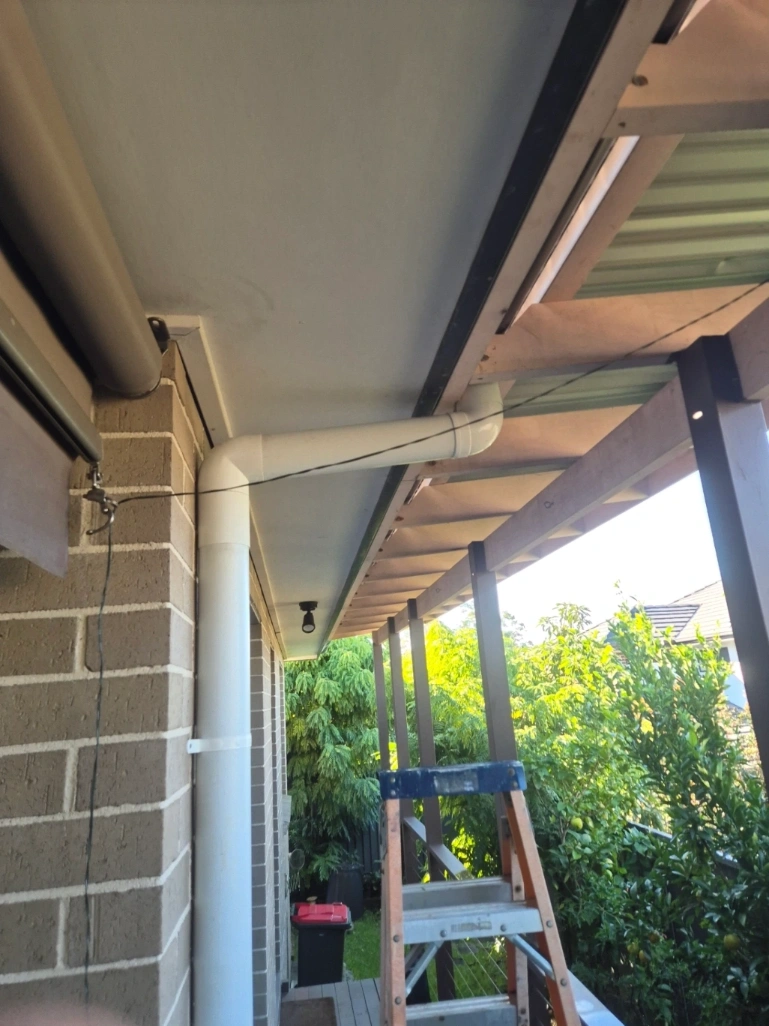
For this North Kellyville property, additional roof water collection points were required to improve drainage performance.
The project involved supplying and installing two new colour-matched downpipe nozzles that integrated with the existing gutter system.
The nozzles act as the transition point between the gutter and the downpipe, directing water from the roof into the drainage network below.
By installing additional collection points, roof water can be distributed more evenly throughout the drainage system rather than concentrating large volumes of water into a limited number of downpipes.
This helps improve overall Stormwater Drainage performance during heavy rain events.
Installing New 90mm PVC Downpipes
Two new 90mm PVC downpipes were installed in designated locations around the property.
PVC downpipes are widely used throughout modern Roof Plumbing systems because they provide:
- Reliable stormwater flow
- Long-term durability
- Corrosion resistance
- Low maintenance requirements
The new downpipes were carefully positioned to suit the roof layout and maximise stormwater collection efficiency.
Each downpipe was then secured to the external walls using saddles and brackets.
This is an important step because properly supported pipework helps prevent movement, sagging, and long-term stress on the drainage system.
Why Roof Water Needs to Reach the Underground Drainage System
Collecting water from the roof is only one part of the process.
The stormwater must also be transported safely away from the property.
Without proper underground connections, water discharged from downpipes can:
- Pool around the home
- Damage landscaping
- Create muddy areas
- Contribute to erosion
- Increase moisture around footings
For this reason, the new downpipes were connected directly into the property's underground stormwater infrastructure.
This ensures rainwater is carried away efficiently through the drainage network rather than being discharged onto the ground surface.
Excavating for New Stormwater Connections
To connect the new downpipes into the drainage network, excavation was carried out across sections of the property.
Excavation is a critical part of Underground Drainage Connections because it allows plumbers to:
- Locate existing stormwater infrastructure
- Install new pipework at the correct depth
- Maintain proper drainage fall
- Create secure connection points
The trenches were excavated with appropriate fall to ensure water could flow efficiently toward the existing main stormwater line.
Proper drainage fall is one of the most important elements of any Stormwater Drainage installation. Even small grading issues can affect long-term drainage performance.
Core Drilling Through the Deck Area
One of the more specialised aspects of the project involved core drilling through the deck area to accommodate an additional rear downpipe.
Core drilling allows plumbers to create precise openings through concrete, masonry, or structural elements without causing unnecessary damage to surrounding surfaces.
This approach provides a clean pathway for new drainage infrastructure while maintaining the integrity of the surrounding structure.
For this project, core drilling allowed the new rear downpipe to be integrated into the drainage system while minimising disruption to the existing deck area.
Protecting Underground Pipework with Concrete Support
Once the underground stormwater pipework was installed, concrete support and encasement were provided around selected connections.
Concrete support helps:
- Protect pipework from ground movement
- Strengthen critical connection points
- Improve long-term durability
- Reduce the risk of settlement affecting the drainage line
This additional protection is particularly valuable where pipework passes beneath landscaped areas, pathways, or locations subject to ongoing ground movement.
At Pure Plumbing Professionals, protecting underground infrastructure is an important part of ensuring long-term drainage performance.
Testing and Commissioning the Stormwater System
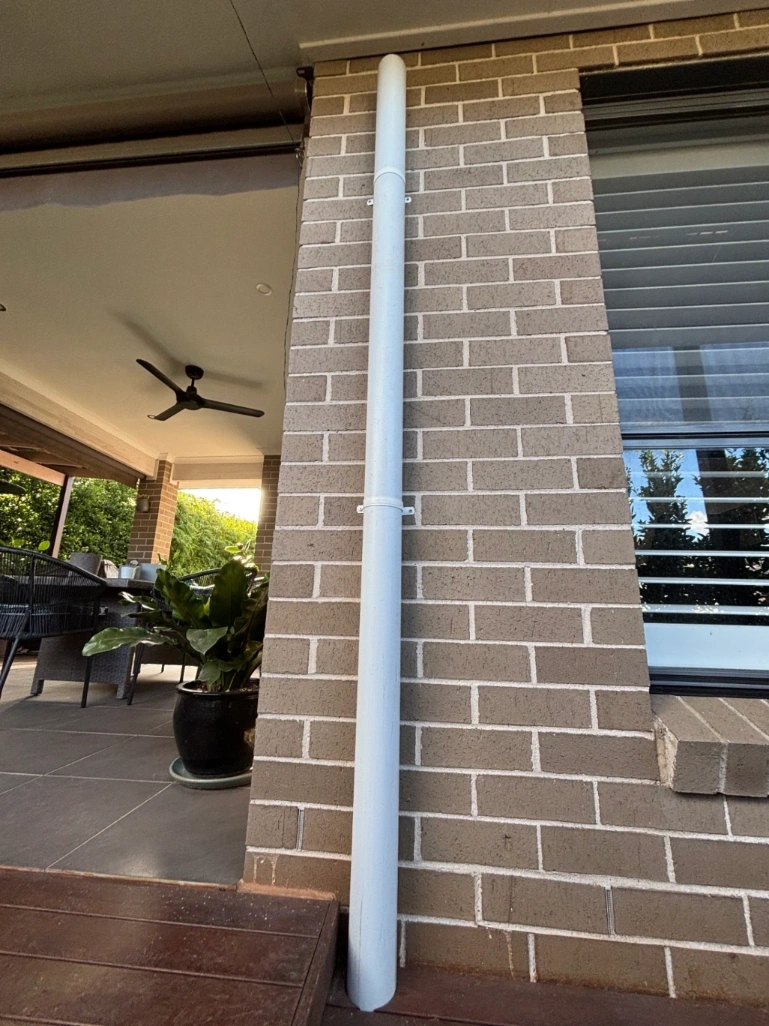
After installation was completed, the entire stormwater system was tested and commissioned.
Testing confirmed:
- Correct water flow through the new downpipes
- Proper operation of the underground drainage connections
- Efficient discharge into the existing stormwater network
- Reliable performance of the upgraded roof drainage system
Final commissioning is an important step because it ensures all new and existing drainage components are working together as a complete system.
What Most Homeowners Don't Realise About Roof Drainage
Many roof drainage problems are not caused by blocked gutters.
In many cases, the issue is simply that the property does not have enough downpipe capacity to handle the volume of water being collected from the roof.
As homes evolve through renovations, extensions, pergolas, decks, and additional roofing structures, the original drainage system may need upgrading to keep pace with the increased roof area.
Adding strategically positioned downpipes is often one of the most effective ways to improve stormwater performance without replacing the entire drainage system.
When Additional Downpipes Are Recommended
Additional Downpipe Installation is commonly recommended when:
- Gutters overflow during heavy rain
- Roof water is concentrated into too few outlets
- New roof areas have been added
- Existing stormwater performance is inadequate
- Surface water issues are developing around the property
Upgrading roof drainage capacity can significantly improve the performance of the broader stormwater network.
Roof Plumbing and Stormwater Services in North Kellyville
Properties in North Kellyville often benefit from stormwater upgrades as landscaping, extensions, and roof layouts evolve over time.
The team at Pure Plumbing Professionals provides:
- Downpipe Installation
- Roof Plumbing
- Stormwater Drainage
- Underground Drainage Connections
- Stormwater Upgrades
- Drainage Plumbing and water management solutions
Every project is designed to improve roof water collection, drainage performance, and long-term stormwater reliability.
If you are experiencing overflowing gutters, inadequate roof drainage, or stormwater issues around your property, a professional assessment can help determine whether additional downpipes or drainage upgrades are required.
Call 0483 915 451 to speak with our team or click Book Now to arrange an inspection.
