

Installing Waterproofing, AG Drains and Pump Systems to Control Groundwater Around the Home
Our team attended a property in Wahroonga to carry out subsoil drainage and waterproofing works along an affected wall area where groundwater was placing pressure on the structure. The objective of the project was to intercept groundwater before it reached the building, improve moisture management around the footings, and provide a controlled discharge point for collected water.
Many homeowners assume drainage issues are caused solely by surface water. In reality, some of the most persistent moisture problems originate below ground where water slowly accumulates against walls and footings over time.
For this project, Pure Plumbing Professionals installed a complete groundwater management system incorporating waterproofing, agricultural drainage, a pump-out system, and new stormwater connections to help protect the property long-term.
Why Groundwater Can Cause Ongoing Problems Around a Property
Unlike stormwater, which is usually visible during rainfall, groundwater often develops slowly beneath the surface.
After periods of rain, water can become trapped within surrounding soil and begin building pressure against:
- Footings
- Retaining walls
- Garage walls
- Subfloor areas
- Below-ground structures
Over time this can lead to dampness, mould growth, water ingress, saturated soil conditions, and ongoing moisture-related problems.
In areas such as Wahroonga, where many properties sit on sloping blocks with established landscaping, groundwater management is often just as important as traditional Stormwater Drainage.
Excavating to Access the Affected Wall Area
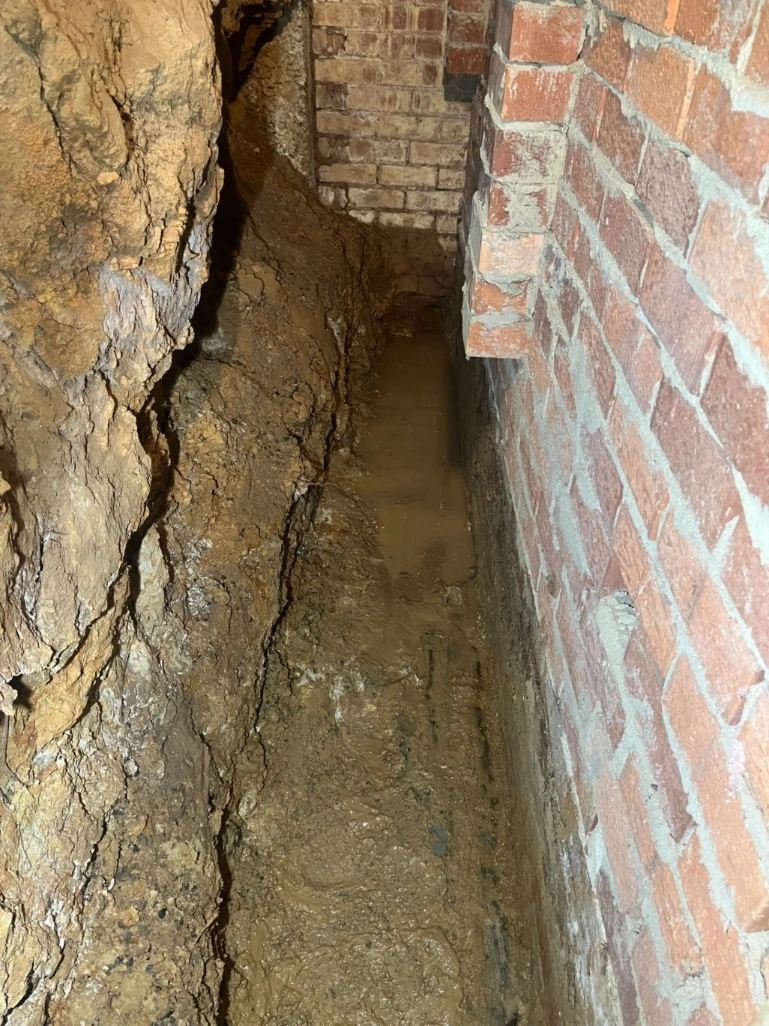
To begin the works, excavation was carried out along approximately five metres of the affected wall section.
The excavation exposed the below-ground portion of the wall and created sufficient space for installation of the new drainage and waterproofing systems.
Excavation for Subsoil Drainage is about much more than digging a trench. It allows plumbers to:
- Assess moisture conditions around the footing area
- Access the wall surface for waterproofing
- Install drainage infrastructure at the correct depth
- Create a pathway for groundwater collection and movement
All excavated spoil was removed from site to allow the drainage system to be installed correctly.
Why Waterproofing Was Applied to the Wall
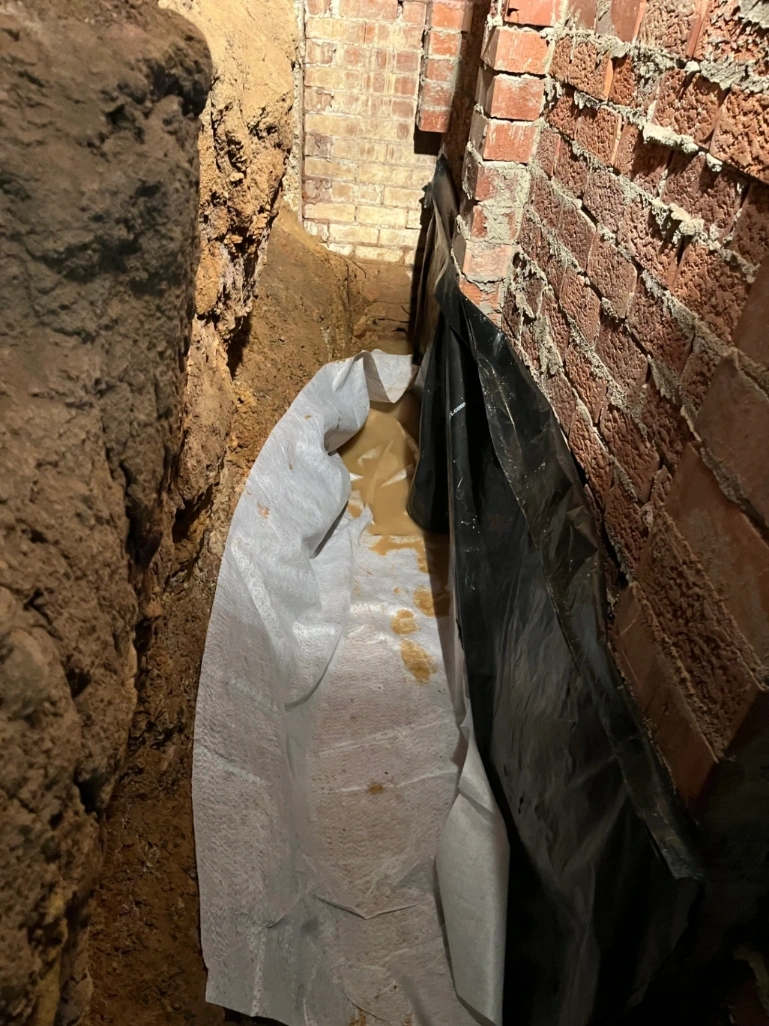
Once the wall area was exposed, the surface was cleaned and prepared for waterproofing.
Preparation is one of the most important parts of any waterproofing project because membranes can only perform correctly when applied to a properly prepared substrate.
Multiple coats of waterproofing membrane were then applied to the below-ground wall section.
The purpose of waterproofing is to create a protective barrier that prevents moisture from penetrating the wall structure.
Without waterproofing, groundwater can slowly migrate through porous materials and eventually appear inside garages, subfloors, storage areas, or internal living spaces.
For this project, the waterproofing system formed the first layer of defence against groundwater intrusion.
Installing a Moisture Barrier for Additional Protection
In addition to the waterproofing membrane, a black plastic moisture barrier was installed along the wall.
Many homeowners are unfamiliar with moisture barriers, but they play an important role in groundwater management systems.
The barrier helps:
- Protect the waterproofing membrane from damage during backfilling
- Reduce direct moisture contact against the wall
- Create separation between soil and the structure
- Improve the longevity of the waterproofing system
Using both waterproofing and physical moisture barriers provides a more comprehensive level of protection than relying on a single system alone.
How Agricultural Drainage Helps Remove Groundwater
A key part of the project involved installation of approximately five metres of agricultural drainage pipework beneath the subfloor area.
Agricultural drains, often referred to as AG drains, are perforated pipes specifically designed to collect groundwater from surrounding soil.
Instead of allowing water to build up against the structure, the AG drain intercepts groundwater and redirects it into a controlled drainage system.
This helps:
- Relieve hydrostatic pressure against walls and footings
- Reduce saturated soil conditions
- Prevent moisture accumulation around the building
- Improve long-term drainage performance
At Pure Plumbing Professionals, AG Drain Installation is one of the most effective methods for managing groundwater around residential properties.
Why Geofabric and Blue Metal Aggregate Are Important
After the AG drainage line was installed, it was wrapped in geofabric and surrounded with blue metal aggregate.
These materials are critical to the performance of any subsoil drainage system.
The geofabric acts as a filter layer that prevents soil particles from entering the drainage pipe.
The blue metal aggregate creates a free-draining zone around the pipe, allowing groundwater to move efficiently toward the AG drain.
Without these components, drainage systems can gradually become clogged with sediment and lose effectiveness over time.
This is one of the reasons professionally installed Subsoil Drainage systems generally perform much better than basic drainage trenches.
Why a Pump-Out System Was Required
One of the most important aspects of this project was installation of a new pump-out pit and stormwater pump system.
In some properties, gravity alone is not enough to move groundwater to an appropriate discharge point.
This may occur when:
- The drainage area sits lower than the stormwater connection
- The site has limited natural fall
- Groundwater needs to be lifted to a higher discharge point
In these situations, a Pump-Out System collects water within a pit and automatically pumps it into the stormwater network.
For this project, the pump system provided a reliable method of removing collected groundwater and preventing it from accumulating around the building.
Connecting the Groundwater System to the Stormwater Network
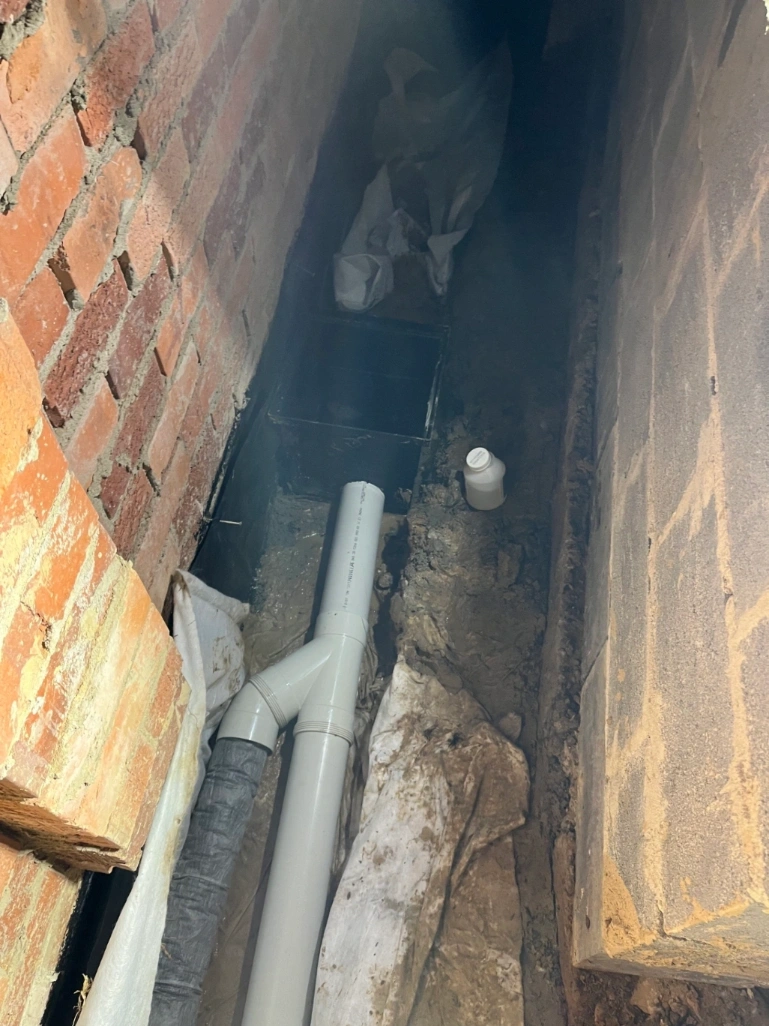
To complete the installation, approximately seven metres of PVC discharge pipework was installed.
The team core drilled through the garage wall and concealed the pipework where practical before connecting the discharge line into the existing downpipe and stormwater system.
This connection is important because groundwater needs a controlled destination once it is collected.
By integrating the pump discharge into the existing Stormwater Drainage system, collected groundwater could be safely removed from the property.
Additional Drainage and Waterproofing Works
During the project, additional works were completed to ensure the entire affected area received adequate protection.
This included:
- Extending the AG drainage line
- Excavating additional wall sections
- Applying further waterproofing membrane
- Reconnecting and verifying the complete drainage system
These additional measures helped ensure the groundwater management system operated consistently across the entire affected area.
Testing and Commissioning the System
Once installation was complete, all drainage and pump systems were tested and commissioned.
This process confirmed:
- Correct operation of the pump system
- Effective groundwater collection
- Proper discharge into the stormwater network
- Reliable performance of the complete drainage system
Testing is essential because groundwater systems must function automatically and reliably during periods of heavy moisture and rainfall.
What Most Homeowners Don't Realise About Groundwater Problems
Many homeowners focus on visible water issues while overlooking the hidden effects of groundwater.
Groundwater pressure can remain active long after rain has stopped and may continue affecting walls and footings for extended periods.
This pressure, known as hydrostatic pressure, is one of the leading causes of below-ground moisture problems.
Without appropriate drainage and waterproofing systems, water can continue finding pathways into structures even when no obvious flooding is present.
This is why successful groundwater management often requires a combination of:
- Waterproofing
- AG Drain Installation
- Pump-Out Systems
- Stormwater Drainage connections
rather than relying on a single solution.
When Subsoil Drainage and Pump Systems Are Recommended
This type of installation is commonly recommended when:
- Groundwater is entering garages or subfloor areas
- Dampness appears on below-ground walls
- Water collects around footings after rain
- Existing drainage systems cannot remove groundwater effectively
- Gravity drainage alone is not sufficient
Addressing groundwater early helps reduce long-term moisture damage and improve overall property protection.
Drainage and Waterproofing Services in Wahroonga
Properties in Wahroonga often benefit from specialised groundwater management systems due to local terrain, established gardens, and varying soil conditions.
The team at Pure Plumbing Professionals provides:
- Subsoil Drainage
- Waterproofing services
- AG Drain Installation
- Pump-Out Systems
- Stormwater Drainage upgrades
- Excavation Plumbing and groundwater management solutions
Each system is designed to suit the property's conditions and provide reliable long-term moisture control.
If you are experiencing damp walls, groundwater issues, or water ingress around your property, a professional drainage assessment can help identify the cause and provide a long-term solution.
Call 0483 915 451 to speak with our team or click Book Now to arrange an inspection.
