

Using Moisture Meters, Thermal Imaging and Groundwater Testing to Diagnose Water Ingress Problems
Our team attended a property in Gordon to investigate ongoing water ingress concerns and assess the effectiveness of the existing subsoil drainage system. Rather than immediately recommending drainage works, the first priority was understanding exactly where moisture was coming from and how it was affecting the property.
Water ingress investigations are often far more complex than homeowners expect. Moisture can originate from groundwater, stormwater runoff, failed waterproofing, poor site grading, leaking services, or a combination of several factors.
For this reason, Pure Plumbing Professionals carried out a detailed drainage and moisture investigation using subsoil inspections, exploratory excavation, thermal imaging technology, laser level surveys, and digital moisture testing equipment to build a complete picture of the property's drainage performance.
Why Water Ingress Can Be Difficult to Diagnose
One of the biggest challenges with moisture problems is that the visible symptoms are often not where the water originates.
A homeowner may notice:
- Damp walls
- Musty odours
- Wet carpet
- Mould growth
- Water stains
- Moisture beneath flooring
However, the actual source of the problem may be many metres away.
Groundwater can travel through soil, moisture can migrate through building materials, and drainage failures may remain hidden for years before becoming obvious.
This is why professional Water Ingress Assessment focuses on gathering evidence rather than making assumptions.
What Is a Moisture Meter and Why Do Plumbers Use One?
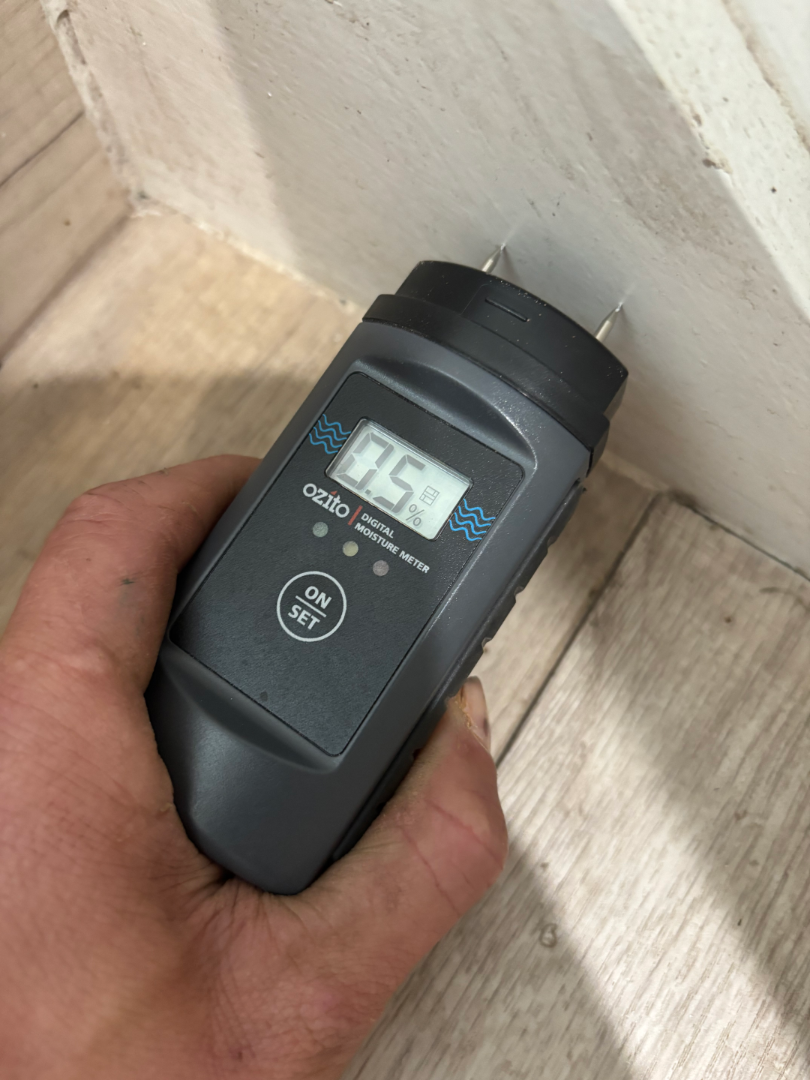
One of the tools used during this Gordon investigation was a digital moisture meter, similar to the Ozito moisture reader often used during building and drainage investigations.
Many homeowners see these small handheld devices and assume they are simply measuring whether something feels wet.
In reality, they provide valuable information about how much moisture is present inside building materials.
The two metal probes on the front of the meter are inserted into materials such as:
- Timber
- Gyprock
- Plaster
- Skirting boards
- Structural framing
- Subfloor components
The device then measures electrical resistance between the probes.
Because water conducts electricity differently than dry materials, the meter can estimate moisture levels hidden beneath the surface.
For plumbers, this helps answer important questions such as:
- Is the wall actively wet?
- Has moisture spread further than expected?
- Is the material drying out or becoming wetter?
- Which areas require further investigation?
Rather than relying on visual signs alone, moisture meters provide measurable data that helps identify affected areas more accurately.
Why Moisture Readings Matter
Moisture meters are particularly useful because water damage is not always visible.
A wall may look perfectly normal while moisture levels behind the surface continue rising.
By comparing readings from different areas throughout the property, plumbers can often establish:
- The extent of moisture migration
- The likely direction water is travelling
- Whether moisture is concentrated near external walls
- Whether subfloor areas are contributing to the issue
This information helps guide further investigation and assists in determining whether drainage improvements are required.
Using Thermal Imaging to Find Hidden Moisture
Alongside moisture meter readings, thermal imaging technology was used during the investigation.
Thermal cameras don't directly see water.
Instead, they detect temperature differences within building materials.
Moisture often changes how surfaces heat and cool, creating temperature variations that appear on the thermal image.
This can help identify:
- Hidden moisture pockets
- Damp wall cavities
- Areas affected by water ingress
- Potential pathways of moisture migration
Thermal imaging is particularly useful because it allows plumbers to inspect large areas quickly without removing wall linings or flooring.
When combined with moisture meter readings, it provides a much clearer understanding of what is happening behind finished surfaces.
Investigating Groundwater Conditions
Because the property was experiencing ongoing moisture concerns, exploratory excavation was also carried out.
Test holes were excavated around the property to assess:
- Soil composition
- Groundwater levels
- Water table conditions
- Existing drainage performance
This stage is important because groundwater behaves differently to surface water.
Groundwater can remain present around a property long after rainfall has stopped and may continue placing pressure on walls, footings, and subfloor areas.
By physically inspecting soil conditions, plumbers can determine whether water is accumulating below ground and whether additional Subsoil Drainage may be required.
Inspecting the Subfloor Area
Access was also gained beneath the dwelling to inspect the subfloor environment.
Subfloor inspections often reveal important clues that are not visible elsewhere in the home.
Our team assessed:
- Signs of dampness
- Moisture staining
- Ventilation conditions
- Groundwater presence
- Existing drainage infrastructure
Subfloor areas often act as an early warning system for groundwater problems because moisture tends to accumulate in these spaces before becoming visible within the living areas above.
Why Laser Level Surveys Are Used
Another important part of the investigation involved laser level surveys.
Many water ingress problems are not caused by drainage failures alone. Sometimes the issue is simply that water is flowing toward the building rather than away from it.
Laser level equipment allows plumbers to accurately compare:
- Internal floor levels
- External ground levels
- Site grading
- Existing drainage falls
Even relatively small level differences can significantly affect how water behaves around a property.
By measuring these levels accurately, drainage solutions can be designed based on evidence rather than guesswork.
Assessing Existing Subsoil Drainage
The investigation also included assessment of the property's existing subsoil drainage infrastructure.
Subsoil drainage systems are designed to intercept groundwater before it reaches building footings and below-ground structures.
During the inspection, our team evaluated:
- Drainage layout
- Drain condition
- Water collection effectiveness
- Potential restrictions or deficiencies
- Overall system performance
In many older properties, drainage systems may no longer be functioning as originally intended, leading to groundwater accumulation around the dwelling.
Why Investigation Comes Before Drainage Recommendations
One of the biggest mistakes homeowners can make is installing drainage systems before understanding the true cause of the problem.
Drainage, waterproofing, and moisture management solutions should be based on evidence gathered during the investigation.
For this Gordon project, the information collected through:
- Moisture meter testing
- Thermal imaging
- Groundwater assessment
- Subfloor inspections
- Laser level surveys
provided the data needed to develop targeted recommendations for future drainage and waterproofing improvements.
What Most Homeowners Don't Realise About Moisture Problems
Many moisture issues are not caused by a single fault.
Water ingress often results from multiple contributing factors working together, including:
- Groundwater pressure
- Site grading issues
- Ineffective subsoil drainage
- Poor stormwater management
- Waterproofing deficiencies
This is why proper Drainage Diagnostics are so valuable.
Finding the actual cause is often more important than rushing into repairs.
Drainage Investigation Services in Gordon
Properties in Gordon commonly experience groundwater and drainage challenges due to block topography, mature landscaping, and varying soil conditions.
The team at Pure Plumbing Professionals provides:
- Subsoil Drainage Investigation
- Water Ingress Assessment
- Moisture Detection
- Thermal Imaging Inspection
- Drainage Diagnostics
- Waterproofing Investigation
Every investigation is focused on identifying the root cause of moisture problems and developing practical long-term solutions.
If you're experiencing dampness, water ingress, musty odours, or unexplained moisture around your property, a professional drainage investigation can help determine exactly what is happening and what needs to be done next.
Call 0483 915 451 to speak with our team or click Book Now to arrange an inspection.
